Text size
Line height
Text spacing


Welcome to the Basic First Aid course. In a mining workplace, the first few minutes after an injury or sudden illness matter. This course will help you recognise when someone needs help, respond safely, and provide care within the limits of your training until further help arrives.
We will start with scene safety, the role of the first aider, and how to report an emergency using site procedures. You will learn to check a casualty’s response and breathing, recognise urgent warning signs, and decide when to call for emergency assistance.
We will then look at care for common injuries, including cuts, bleeding and suspected broken bones. You will also learn how to keep monitoring a casualty’s condition. This includes observing changes in their response and breathing, checking their pupils when appropriate, and using the capillary refill method to assess how quickly colour returns to a fingernail after pressure is released.
First aid continues after the first treatment. A first aider should reassure the casualty, watch for changes, keep them as stable and comfortable as possible, and give a clear handover when the emergency team arrives.
By the end of the course, you should be able to assess a situation, recognise priorities, provide appropriate initial care, and explain what you observed and did. Please take part in the demonstrations and practice activities, and ask questions whenever you are unsure.
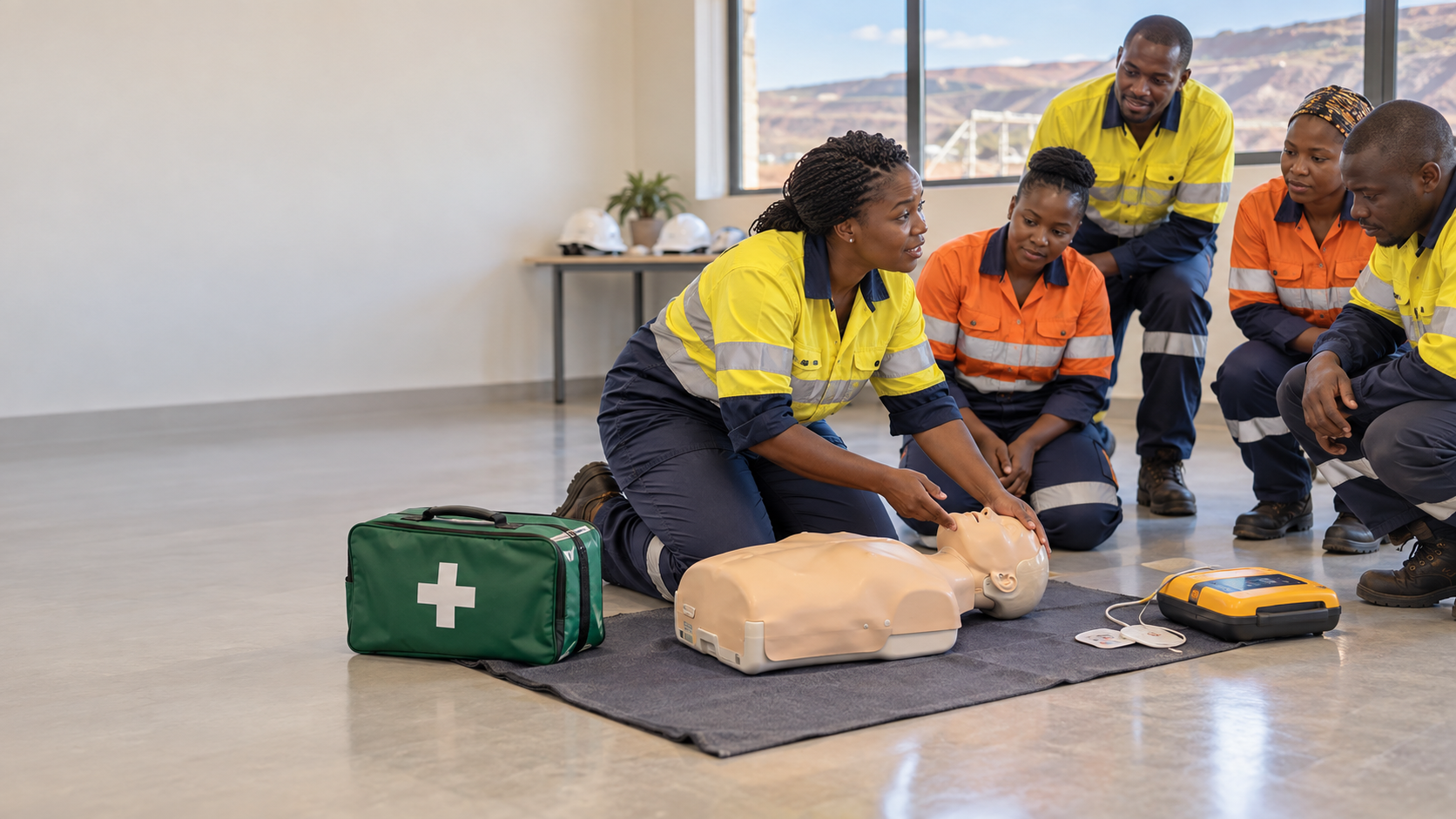
Welcome to the Basic First Aid course. In a mining workplace, the first few minutes after an injury or sudden illness matter. This course will help you recognise when someone needs help, respond safely, and provide care within the limits of your training until further help arrives.
We will start with scene safety, the role of the first aider, and how to report an emergency using site procedures. You will learn to check a casualty’s response and breathing, recognise urgent warning signs, and decide when to call for emergency assistance.
We will then look at care for common injuries, including cuts, bleeding and suspected broken bones. You will also learn how to keep monitoring a casualty’s condition. This includes observing changes in their response and breathing, checking their pupils when appropriate, and using the capillary refill method to assess how quickly colour returns to a fingernail after pressure is released.
First aid continues after the first treatment. A first aider should reassure the casualty, watch for changes, keep them as stable and comfortable as possible, and give a clear handover when the emergency team arrives.
By the end of the course, you should be able to assess a situation, recognise priorities, provide appropriate initial care, and explain what you observed and did. Please take part in the demonstrations and practice activities, and ask questions whenever you are unsure.